
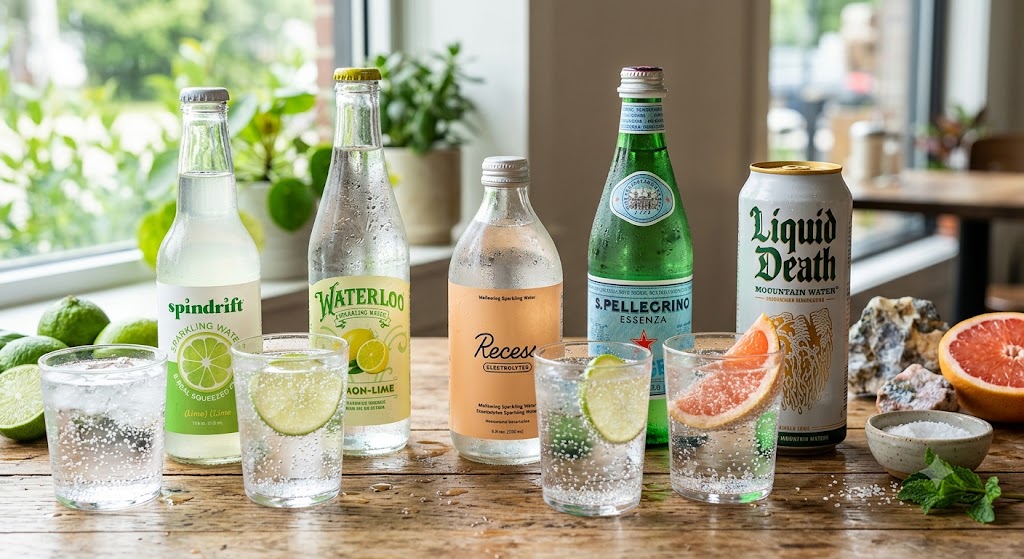
You finish a heavy workout, you’re sweating, and you reach for a cold sparkling water. But then you stop and wonder—does this actually have anything in it that helps with recovery, or is it just fancy bubbles?
It is a completely fair question to ask. The global sparkling water category has exploded into a massive $34 billion market, according to Grand View Research (2023). Along with that growth, brands have started putting buzzwords like “electrolytes,” “minerals,” and “hydration support” on their labels faster than you can read them. Some of those claims indicate a real, functional product. Others indicate nothing more than marketing copy designed to make a standard seltzer look premium.
Knowing the difference can save you money and keep you genuinely hydrated.
This article reviews every major sparkling water brand that contains actual electrolytes. We will look at what those electrolytes are, how much mineral content is in each bottle, how the brands taste, and which one is worth buying based on your specific health goals.
What Are Electrolytes and Why Do Sparkling Waters Need Them?
Electrolytes are minerals that carry an electrical charge when dissolved in water. The primary electrolytes your body depends on are sodium, potassium, calcium, magnesium, and bicarbonate. Your muscles, nervous system, kidneys, and heart rely on these charges to function. When you sweat, you lose both water and these vital mineral salts.
According to the National Institutes of Health (NIH), adults require:
- Calcium: 1,000 to 1,300 mg daily
- Magnesium: 310 to 420 mg daily
- Potassium: 2,600 to 3,400 mg daily
A single serving of mineral water won’t replace your full daily requirement, but for consistent drinkers of sparkling water, choosing a brand with real mineral content is a much smarter daily habit than drinking one with zero.
The catch is that most mainstream seltzers—like LaCroix, Bubly, Waterloo, and Spindrift—contain zero minerals or only trace amounts. They are simply carbonated purified water with fruit essence. Electrolyte content, if any, comes either naturally from a spring source (mineral waters) or gets added during production (functional beverages). Understanding that split is the first step to shopping smarter.
Naturally Mineral-Rich Sparkling Waters
Naturally sourced sparkling mineral waters are drawn from underground springs. As the water filters through volcanic rock and limestone, it naturally dissolves minerals from the surrounding earth, bottling them at the source.
Gerolsteiner: The High-Mineral Powerhouse
If you want the most mineral-dense, electrolyte-rich sparkling water available in the United States, Gerolsteiner is the undisputed champion. Sourced from a volcanic aquifer in the Eifel region of Germany, it carries a remarkably high Total Dissolved Solids (TDS) count of approximately 2,527 mg/L.
Per liter, Gerolsteiner contains:
- Calcium: 348 mg
- Magnesium: 108 mg
- Sodium: 118 mg
- Bicarbonate: 1,816 mg
This level of mineralization gives Gerolsteiner a very distinct taste profile. It is slightly earthy, thick, and almost savory on the tongue, with a crisp mineral bite. It is not a light, neutral seltzer. Some drinkers find it takes a few sips to adjust to the heavy mineral structure, while others love the mouthfeel immediately. It is increasingly available in Whole Foods, Trader Joe’s, and mainstream grocery stores in 750 mL glass bottles, which preserve the natural flavor and prevent plastic leaching.
San Pellegrino: The Widely Available Classic
San Pellegrino is the most recognizable sparkling mineral water in the world. Sourced from natural springs in the Italian Alps near San Pellegrino Terme, it features a TDS count of roughly 1,109 mg/L.
Per liter, San Pellegrino contains:
- Calcium: 203 mg
- Magnesium: 56.2 mg
- Sodium: 36.3 mg
- Potassium: 34.5 mg
San Pellegrino’s calcium content is particularly notable. At 203 mg per liter, it contributes a meaningful amount toward your daily requirement. A 2022 review in the journal Nutrients confirmed that the calcium in mineral water has a bioavailability comparable to calcium found in dairy products, making it a viable dietary supplement for dairy-free individuals. The bubbles are fine, gentle, and smooth, which is why it is preferred in restaurants to pair with food.
Topo Chico: The Aggressive Cult Favorite
Topo Chico originates from the Cerro del Topo Chico spring in Monterrey, Mexico, where it has been bottled since 1895. It has built a massive cult following, leading to its acquisition by Coca-Cola in 2017.
While Topo Chico does not publish a detailed mineral analysis on its labels in the manner of European brands, it contains naturally occurring calcium, magnesium, potassium, and manganese. What it is famous for is its carbonation intensity. Topo Chico features some of the sharpest, longest-lasting, and most aggressive bubbles of any carbonated water on the market.
Note: In 2020, a Consumer Reports investigation found Topo Chico had PFAS levels of 9.76 parts per trillion (ppt), the highest of the brands tested. Topo Chico has since updated its filtration processes, reducing those levels to an average of 3.9 ppt, well under the EPA guidance limits.
Perrier: The Light-Mineral French Icon
Perrier comes from a spring in Vergèze, France, and has been in production since 1863. It features a much lighter mineral profile than Gerolsteiner or San Pellegrino, with a TDS count of roughly 475 mg/L.
Per liter, Perrier contains:
- Calcium: 147 mg
- Magnesium: 3.4 mg
- Sodium: 9 mg
Perrier is notably low in magnesium and sodium, which gives it a cleaner, crisper, and more neutral water taste than San Pellegrino. The carbonation is medium-fine and consistent. If you want a light, easy-drinking mineral water that doesn’t taste “salty” or heavy, Perrier is a reliable, low-sodium option.
Added-Electrolyte Functional Waters
In contrast to spring-sourced mineral waters, a newer category of functional beverages adds minerals to purified carbonated water during manufacturing. These are designed to serve as sugar-free alternatives to traditional sports drinks.
Liquid IV Sparkling: The Hydration Leader
Liquid IV is famous for its hydration powders, and they have adapted that formula into a canned sparkling beverage. Modeled on World Health Organization (WHO) Oral Rehydration Solution principles, it is a serious recovery tool.
Each 12 oz can delivers:
- Sodium: 500 mg
- Potassium: 380 mg
- Magnesium: 60 mg
The mineral dosage is exceptionally high, designed for rapid rehydration after intense workouts or heavy sweating. The flavor is mild, the carbonation is light, and it is unsweetened. It is available in most Target and Walmart stores. Because of the high sodium load, it is not a casual sipping water; it is a targeted recovery drink.
LMNT Sparkling: The Extra-High Sodium Drink
From the brand that popularized high-sodium hydration powders, LMNT Sparkling is built specifically for endurance athletes, those following low-carb/keto diets, and heavy sweaters.
Each can contains:
- Sodium: 1,000 mg
- Potassium: 200 mg
- Magnesium: 60 mg
At 1,000 mg of sodium per can, this drink has a noticeably salty taste. It contains zero sugar and zero sweeteners. It is designed to replace the large volumes of sodium lost during heavy physical exertion or to support sodium levels on low-carb diets. If you are drinking it while sitting at a desk, the sodium content is excessive, but for marathon runners or heavy laborers, it is highly functional.
Propel Sparkling: The Sweetened Option
Owned by PepsiCo, Propel Sparkling contains sodium, potassium, and added B vitamins (B3, B5, B6).
Each 16 oz bottle contains:
- Sodium: 160 mg
- Potassium: 35 mg
Unlike LMNT and Liquid IV, Propel is sweetened with sucralose (Splenda) and contains artificial colorings. While it provides moderate electrolyte support, it is not a clean seltzer. If you are avoiding artificial sweeteners or chemical additives, this product is worth skipping.
Side-by-Side Mineral Comparison
Here is how the major sparkling water brands compare in mineral content per liter (mg/L):
| Brand | Calcium (mg/L) | Magnesium (mg/L) | Sodium (mg/L) | Potassium (mg/L) | Source Type |
|---|---|---|---|---|---|
| Gerolsteiner | 348 | 108 | 118 | Trace | Natural Spring |
| San Pellegrino | 203 | 56 | 36 | 34 | Natural Spring |
| Perrier | 147 | 3.4 | 9 | Trace | Natural Spring |
| Topo Chico | Present | Present | Low | Present | Natural Spring |
| LMNT Sparkling | 0 | 170 | 2,800 | 560 | Added minerals |
| Liquid IV | 0 | 170 | 1,400 | 1,070 | Added minerals |
| Propel Sparkling | 0 | 0 | 340 | 75 | Added minerals |
| LaCroix / Bubly | 0 | 0 | 0 | 0 | Purified water |
Is Electrolyte Sparkling Water Healthy?
Yes, provided you choose the right brand for your activity level.
Unsweetened mineral waters (like Gerolsteiner, San Pellegrino, and Topo Chico) are exceptionally healthy choices. They provide essential calcium and magnesium with zero calories, zero sugar, and no sweeteners. According to the Harvard T.H. Chan School of Public Health, drinking sparkling mineral water counts fully toward your daily hydration goals, helping you cut out sugary sodas as recommended by the Dietary Guidelines for Americans, 2025 to 2030.
For functional brands like LMNT and Liquid IV, the sodium content is high. If you are sedentary or have high blood pressure, consuming large amounts of sodium in your drinking water can be counterproductive. These should be treated as athletic tools rather than general refreshments.
⚡ Electrolyte Seltzer Matcher
Answer 2 quick questions to discover your ideal hydration match!
1. What is your hydration goal?
Frequently Asked Questions
Which sparkling water has electrolytes?
Naturally sourced mineral waters like Gerolsteiner, San Pellegrino, Topo Chico, and Perrier contain natural electrolytes from their spring sources. Functional brands like Liquid IV Sparkling and LMNT Sparkling add electrolytes during production. Standard seltzer brands like LaCroix and Bubly contain zero electrolytes.
Does sparkling water contain electrolytes?
Plain seltzer water (carbonated purified water) contains no meaningful electrolytes. Sparkling mineral water sourced from natural springs does contain calcium, magnesium, sodium, and potassium. The label will tell you which category you're holding.
Is electrolyte sparkling water healthy?
For most people, yes. Natural mineral waters provide calcium and magnesium without added sugar. Functional added-electrolyte brands like LMNT are designed for athletes and active people who lose significant sodium through sweat. Brands with artificial sweeteners (like Propel) are worth skipping if that's a concern for you.
What is the best sparkling water with electrolytes?
Gerolsteiner is the highest in natural electrolytes. San Pellegrino is the best widely available mineral-rich option. For added-electrolyte formulas, Liquid IV Sparkling has a strong electrolyte profile without artificial sweeteners.
Does sparkling water have sodium and electrolytes?
It depends entirely on the brand. San Pellegrino has about 36 mg of sodium per liter. LMNT Sparkling has 1,000 mg per can. LaCroix has 0 mg. Always check the nutrition label, not just the packaging claims.
Can you drink sparkling water for electrolytes?
You can, if you choose the right brand. For light daily mineral intake, natural mineral waters work well. For post-workout electrolyte replenishment, functional brands designed for that purpose are more appropriate.
Does Perrier have electrolytes?
Yes, though modestly. Perrier contains approximately 147 mg of calcium per liter, 3.4 mg of magnesium, and 9 mg of sodium. It has less electrolyte content than San Pellegrino or Gerolsteiner.
Does carbonated water have electrolytes?
Carbonated water made by adding CO2 to purified water (seltzer) has no electrolytes. Carbonated mineral water drawn from a spring has natural electrolytes. The type of water determines the mineral content, not the bubbles.
What are electrolyte seltzer waters?
Electrolyte seltzer waters are carbonated beverages that either come from mineral springs (giving them natural electrolytes) or have electrolytes like sodium, potassium, and magnesium added during production. Brands in this category include LMNT Sparkling, Liquid IV Sparkling, and Propel Sparkling.
Does sparkling water with electrolytes have sugar?
Most of them don't. Natural mineral waters contain no sugar at all. Functional brands like LMNT and Liquid IV Sparkling are also sugar-free. Propel uses sucralose as a sweetener. Always check for sucralose, stevia, or other sweetener ingredients if you're avoiding them.
References
- National Institutes of Health, Office of Dietary Supplements. “Calcium Fact Sheet for Health Professionals.” ods.od.nih.gov. Updated 2024.
- National Institutes of Health, Office of Dietary Supplements. “Magnesium Fact Sheet for Health Professionals.” ods.od.nih.gov. Updated 2024.
- Wynn, E. et al. (2022). “Mineral Water as a Source of Dietary Calcium.” Nutrients, 14(4). NCBI.
- Manz, F. & Wentz, A. (2016). Hydration equivalence of sparkling versus still water. American Journal of Clinical Nutrition.
- Consumer Reports. “PFAS in Bottled Water.” consumerreports.org. 2020.
- Grand View Research. “Sparkling Water Market Size, Share and Trends Analysis Report.” grandviewresearch.com. 2023.
- San Pellegrino Mineral Analysis, sanpellegrino.com.
- Gerolsteiner Mineral Analysis, gerolsteiner.de.
- Dietary Guidelines for Americans, 2025 to 2030, realfood.gov.
- Centers for Disease Control and Prevention, “Get the Facts: Added Sugars,” cdc.gov.
- Harvard T.H. Chan School of Public Health, “The Nutrition Source: Water,” hsph.harvard.edu.