
🤪 bubly vs LaCroix Matcher
Answer 2 quick questions to find your perfect everyday sparkling water match!
1. How strong do you want the fruit flavor to taste?
It was only a matter of time before PepsiCo came for LaCroix. When bubly launched in February 2018 with its pastel-colored cans, witty tab messages, and Michael Buble ad campaign, the sparkling water world suddenly had a real rivalry. LaCroix had owned the flavored seltzer conversation for years. Now it had a direct competitor with deeper pockets and wider distribution.
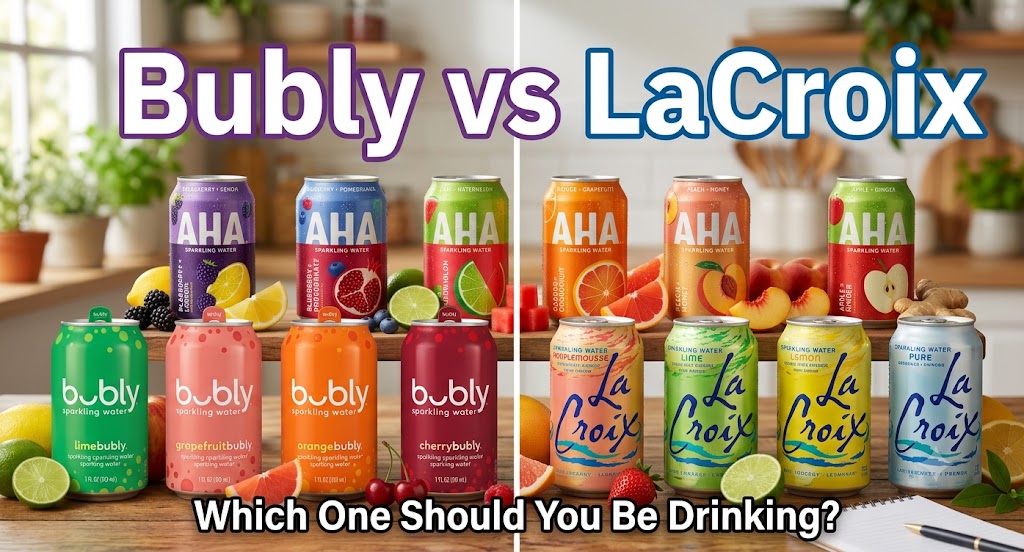
Bubly vs LaCroix is a comparison between two zero-calorie, zero-sugar sparkling waters with very similar ingredient lists but different flavor philosophies. Bubly (PepsiCo) delivers bolder, more fruit-forward flavors. LaCroix (National Beverage Corp) offers subtler, more understated fruit hints. Both contain only carbonated water and natural flavors, with no artificial sweeteners, no preservatives, and no sodium.
Both brands are firmly planted in the sparkling water category that now makes up a significant share of the $51.3 billion U.S. bottled water market, per 2025 data from the International Bottled Water Association. Choosing between them is mostly a question of personal taste preference. This is the full honest comparison, published here on sparklingwaterflavors.com by the Sparkling Water Flavors Team.
What Is Bubly?
Bubly is a flavored sparkling water brand owned and distributed by PepsiCo. It launched in February 2018 as PepsiCo’s direct competitor to LaCroix. The core lineup contains just two ingredients: carbonated water and natural flavor. Zero calories, zero sugar, zero sodium, zero artificial sweeteners. The brand has since expanded into three distinct product lines:
Core bubly is the original zero-calorie, zero-sugar sparkling water, available in about 15 flavors.
Bubly Bounce adds 35 mg of caffeine per can, targeting people who want a mild energy lift from their sparkling water.
Bubly Burst is a juice-sweetened line that contains sucralose and acesulfame potassium. This is a different formula from core bubly and is the only bubly product that contains sweeteners.
What Is LaCroix?
LaCroix is a flavored sparkling water made by National Beverage Corporation. Despite the French-sounding name, LaCroix is an American brand from La Crosse, Wisconsin, with roots going back to 1981. It contains carbonated water and natural flavor essences, with zero calories, zero sugar, zero sodium, and no sweeteners of any kind.
LaCroix was the brand that took flavored sparkling water from a niche product to a mainstream grocery staple. Around 2015, it hit a cultural tipping point where its pastel cans started appearing everywhere: office kitchens, Instagram feeds, college dorms, and dinner party tables. It currently offers more than 30 flavors, one of the largest selections in the category.
Bubly vs LaCroix: Full Comparison
| Feature | bubly | LaCroix |
|---|---|---|
| Owner | PepsiCo | National Beverage Corp. |
| Launched | 2018 | 1981 |
| Calories | 0 | 0 |
| Sugar | 0 g | 0 g |
| Sodium | 0 mg | 0 mg |
| Ingredients | Carbonated water, natural flavors | Carbonated water, natural flavors |
| Flavor count | ~20 (across 3 lines) | 30+ |
| Flavor intensity | Bolder, punchier | Subtler, more delicate |
| Caffeinated option | Yes (Bounce, 35 mg) | No |
| Sweetened option | Yes (Burst line) | No |
| Price (12-pack) | $5 to $7 | $5 to $7 |
| Best for | Bold flavor, caffeine option | Subtle flavor, widest variety |
Taste: The Real Difference Between Bubly and LaCroix
On paper, bubly and LaCroix look identical: carbonated water and natural flavors. In practice, they taste noticeably different.
Bubly flavors land harder on the palate. The grapefruit tastes like grapefruit. The mango tastes distinctly tropical. The cherry has a sweet-tart punch that registers immediately. Independent taste tests, including reviews from Taste of Home and Sporked, consistently describe bubly as the more “pronounced” or “fruit-forward” of the two brands. Some people describe certain bubly flavors as slightly candy-like, which is a strength if you want bold flavor and a drawback if you prefer subtlety.
LaCroix flavors are gentler and more restrained. The Pamplemousse delivers a bright grapefruit aroma but a mild, almost whisper-like flavor on the tongue. The lime is clean and crisp but never sharp. LaCroix’s flavor philosophy is more about suggesting a fruit than delivering one. Long-time fans of LaCroix often say they love it specifically because it does not taste like juice or soda.
The practical test: if you hand someone who has never tried either brand a can of bubly mango and a can of LaCroix mango, they will almost certainly say bubly has more flavor. Whether “more flavor” is what they want is an entirely personal question.
Carbonation: How the Fizz Compares
Both brands deliver standard seltzer-level carbonation. Neither is as aggressive as Topo Chico or Perrier. In most side-by-side tastings, the carbonation difference between bubly and LaCroix is minimal. Some reviewers note that LaCroix has a slightly crisper, more traditional seltzer fizz, while bubly feels marginally smoother. The difference is subtle enough that most casual drinkers would not notice it.
Where carbonation matters more is within bubly’s own product lines. Core bubly and Bubly Bounce have standard carbonation. The mouthfeel stays consistent across flavors and rarely distracts from the fruit character.
Flavor Variety: Who Gives You More Options?
LaCroix wins on sheer number of flavors. With over 30 varieties, including some truly unusual options (Hi-Biscus, Beach Plum, Limoncello, Mojito), LaCroix offers more rotation possibilities for people who get bored easily. The brand also releases seasonal and limited-edition flavors periodically.
Bubly has a smaller but well-curated lineup of about 20 flavors across its three product lines. What bubly lacks in total count, it partly makes up for with sub-brands: Bubly Bounce gives you caffeinated options (35 mg caffeine per can), and Bubly Burst gives you a juice-sweetened alternative. LaCroix does not currently offer a caffeinated or sweetened line.
If variety within the zero-calorie, zero-sugar category is your priority, LaCroix gives you more. If you want the option to switch between zero-calorie, caffeinated, and sweetened sparkling water within one brand family, bubly covers more ground.
Price: Nearly Identical
Bubly and LaCroix are priced very similarly at most U.S. retailers. A 12-pack of either brand typically runs $5 to $7, and an 8-pack sits around $4 to $6. The exact price on any given week depends on which brand is running a sale at your local store.
Both brands are frequently part of multi-pack promotions (buy two, get two free, or 10 for $10 deals) at major retailers like Target, Walmart, Kroger, and Costco. Neither brand has a meaningful price advantage over the other at the national level. Both are cheaper than Spindrift, Waterloo, and most European mineral waters.
Nutrition: Is One Healthier?
The nutrition profiles of core bubly and LaCroix are identical: zero calories, zero sugar, zero sodium, zero fat, zero protein, zero carbs. Neither contains artificial sweeteners. The Harvard T.H. Chan School of Public Health notes that sparkling water counts toward daily hydration, and research shows that plain carbonated water is minimally erosive to tooth enamel compared to sugary drinks.
The health conversation only changes if you look at Bubly Burst, which contains sucralose and acesulfame potassium. If you want to avoid all sweeteners, stick with core bubly or LaCroix. The Dietary Guidelines for Americans, 2025 to 2030, recommend that Americans reduce added sugar intake; both core bubly and LaCroix align with that guidance perfectly.
Which One Should You Buy?
Choose bubly if:
- You want bolder, more noticeable fruit flavors
- You want a caffeinated sparkling water option (Bubly Bounce, 35 mg)
- You enjoy PepsiCo’s fun branding and tab messages
- You want the option to try a sweetened sparkling water (Bubly Burst)
- You appreciate punchier flavor that registers immediately
Choose LaCroix if:
- You prefer subtle, understated fruit flavor
- You want the largest flavor selection (30+)
- You want a brand with no sweetened or caffeinated sub-lines
- You like classic, pastel can aesthetics
- You appreciate lighter flavor that does not compete with food
For a more detailed look at every bubly flavor, including Bounce and Burst, check out our full bubly sparkling water flavors guide on sparklingwaterflavors.com.
Key Takeaways: Bubly vs LaCroix
Bubly and LaCroix share the same basic formula (carbonated water + natural flavors, zero everything), but bubly delivers bolder fruit flavors while LaCroix keeps things subtle and light.
LaCroix offers more flavors (30+) and has been around since the 1980s. Bubly (launched 2018) offers fewer flavors but adds caffeinated (Bounce) and sweetened (Burst) sub-lines that LaCroix does not have.
Pricing is nearly identical at most retailers, so the choice comes down to flavor intensity preference: strong and punchy (bubly) vs. delicate and understated (LaCroix).
For more sparkling water comparisons and flavor guides, keep browsing sparklingwaterflavors.com.
References
- International Bottled Water Association (IBWA), “Bottled Water Market: 2025 Data,” bottledwater.org
- PepsiCo, “bubly Sparkling Water,” pepsico.com
- National Beverage Corporation, “LaCroix Sparkling Water,” lacroixwater.com
- Dietary Guidelines for Americans, 2025 to 2030, realfood.gov
- Harvard T.H. Chan School of Public Health, “The Nutrition Source: Water,” hsph.harvard.edu
- Centers for Disease Control and Prevention, “Get the Facts: Added Sugars,” cdc.gov
Frequently Asked Questions
Which is better bubly or LaCroix? Neither is objectively better. Bubly has bolder fruit flavors and is owned by PepsiCo. LaCroix has subtler flavors and a longer history. Both have zero calories, zero sugar, and no artificial sweeteners. The right choice depends on your flavor intensity preference.
Does bubly have caffeine? Core bubly is caffeine free. Only Bubly Bounce contains caffeine at 35 mg per can. The entire LaCroix lineup is caffeine free.
What flavors does bubly have compared to LaCroix? Bubly offers about 20 flavors across core, Bounce, and Burst lines. LaCroix offers over 30 flavors, including unique options like Pamplemousse, Hi-Biscus, and Beach Plum. LaCroix has the larger selection overall.
Is bubly cheaper than LaCroix? They are priced very similarly, typically $5 to $7 per 12-pack. The cheaper option on any given week depends on store promotions.
Which sparkling water tastes better bubly or LaCroix? Bubly has bolder, more pronounced fruit flavors. LaCroix is more subtle and understated. People who want strong flavor prefer bubly; people who prefer barely-there flavor lean toward LaCroix.
How many flavors does bubly have? About 20 flavors across three product lines: core (about 15), Bubly Bounce (caffeinated), and Bubly Burst (sweetened). The count shifts as flavors launch and rotate.
Is bubly sparkling water healthy? Yes. Core bubly has zero calories, zero sugar, zero sodium, and no artificial sweeteners. Bubly Burst is different and contains sucralose, so check the product line.
Does bubly contain sugar? Core bubly and Bubly Bounce contain zero sugar. Bubly Burst contains sweeteners. Read the label on each specific product.
What is the difference between bubly and LaCroix? Bubly is PepsiCo-owned, launched 2018, with bolder flavors. LaCroix is National Beverage Corp-owned, dating to the 1980s, with subtler flavors. Both use carbonated water and natural flavors at zero calories.
Does bubly use natural flavors? Yes. Core bubly contains only carbonated water and natural flavors. No artificial sweeteners or preservatives. The Bubly Burst line has a different formula with added sweeteners.